
JOSE MENA
CANCER
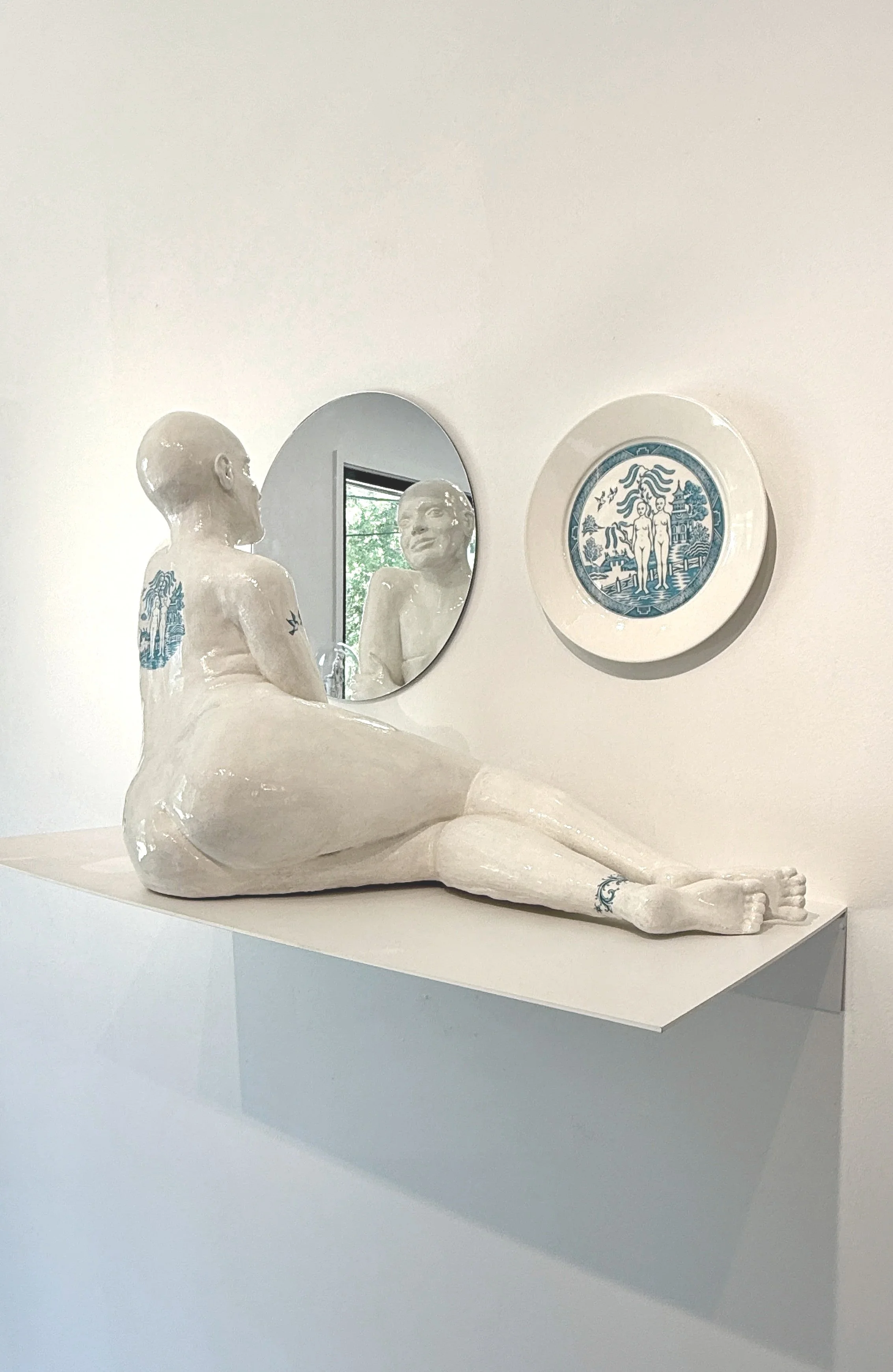
Cancer is part of an ongoing series called Invaluable, an exploratory celebration of divergent bodies and a necessary reminder that all bodies are beautiful and everyone deserves to be loved. The series finds beauty precisely where society refuses to look.
This piece portrays a breast cancer survivor standing unapologetically nude, her baldness and mastectomy scars not as symbols of loss, but of transformation. Her expression radiates confidence and serenity, inviting the viewer to see beyond the body as an object of perfection and toward the body as testimony. This work speaks to the power of representation and the visibility of those whose journeys redefine beauty, femininity, and courage. Through her, we are invited to confront our discomfort and expand our empathy.
The piece intentionally reinterprets Chinese porcelain, one of the most precious, admired, and collected art forms in human history, found in the world’s most important museums and exclusive collections. Here, the human body takes the place of porcelain: equally delicate, irreplaceable, and worthy of admiration. The blue decorative motifs, self-designed in the style of traditional Chinese porcelain, become tattoos on a body that stands strong, proud, and certain of its value. Her nudity is not incidental, but intentional: an act of openness, presence, and declaration — I am here, and I love every inch of this precious body, even if you have been told not to.
These tattoos are also a tribute. Each motif is inspired by women close to me who have faced cancer, women who endured this journey with courage, resilience, and extraordinary strength. This piece is for them.
Cancer is a tribute to sisterhood in all its forms: to the profound role women play in one another’s lives as companions, caregivers, lovers, girlfriends, wives, family, and friends. It celebrates the bonds that sustain us through uncertainty and loss, and the quiet acts of love that help us carry what feels impossible to bear.
It is also a celebration of the partners who stay; in this case, a same-sex love that remains steadfast through adversity. A love that nurtures, protects, endures, and transcends. Because this is more than romance; it is an act of profound love and sisterhood.
To all the women who have stood beside another woman when she needed it most. To those who held her hand, carried her weight, and refused to let her fall. This work is for you.
We see you. We admire you. We know how magnificent you are.
EQUALS MY DOLLAR
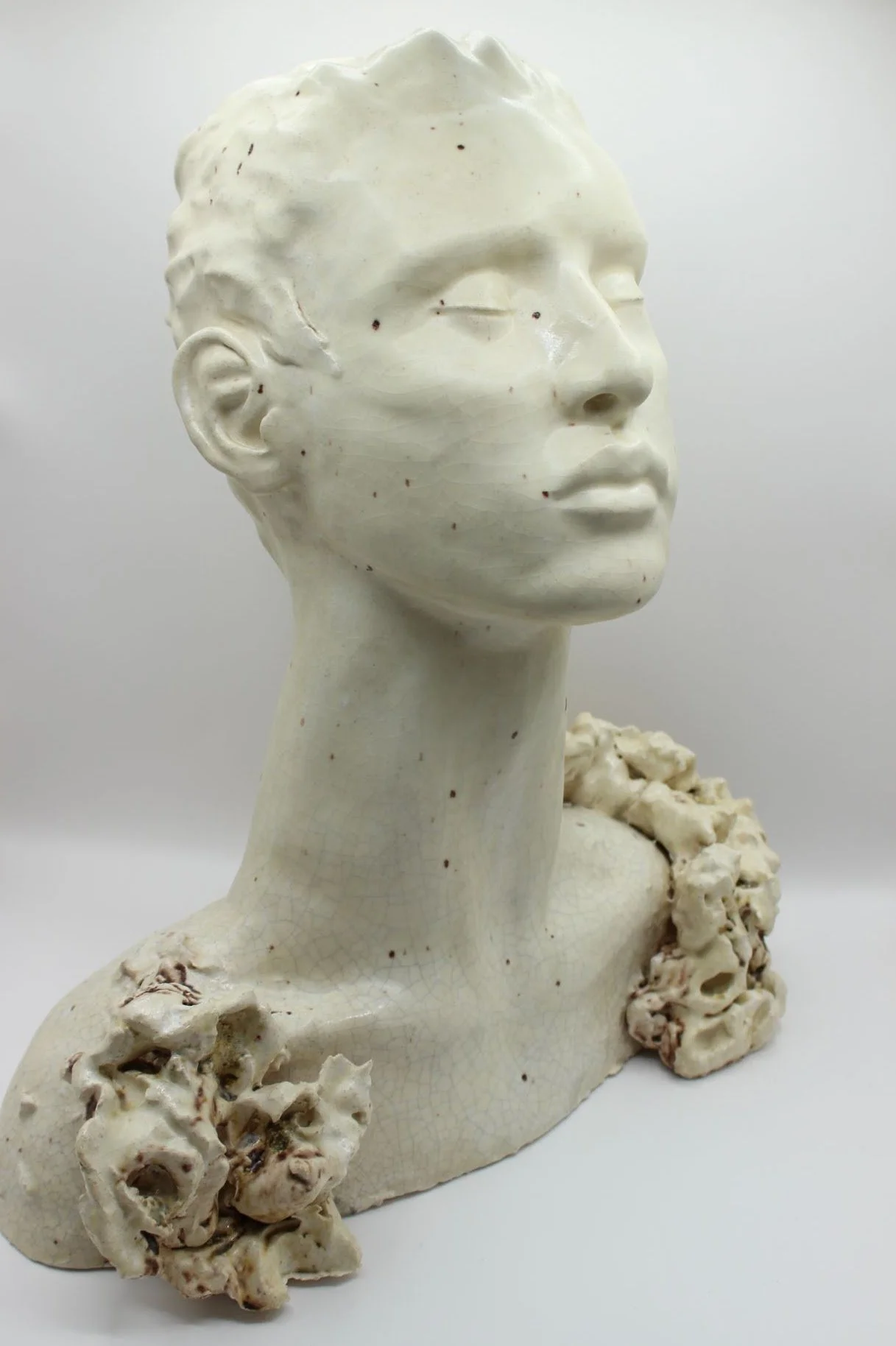
Equals My Dollar confronts the viewer with one of humanity’s most painful mirrors: our capacity for silence in the face of documented, witnessed, and named suffering. The work draws parallels between the genocides of the twentieth century and the ongoing war in Gaza, asking us to examine our collective response when history does not simply repeat itself, but unfolds again in real time — on our screens, in our hands, and before our eyes.
At the center of the composition, a female figure rises from fragmented ruins, surrounded by abstracted remnants of what was once home. Her elongated neck and upward gaze do not suggest triumph, but rather the stubborn insistence of the human body to exist, endure, and transcend what has been done to it.
Through this work, the artist invites reflection on complicity, the moral weight of witnessing, and the unbearable distance between knowing and acting. Equals My Dollar asks a difficult and necessary question: What do we do, or fail to do, while atrocity unfolds in front of us?
TRANSGENDER
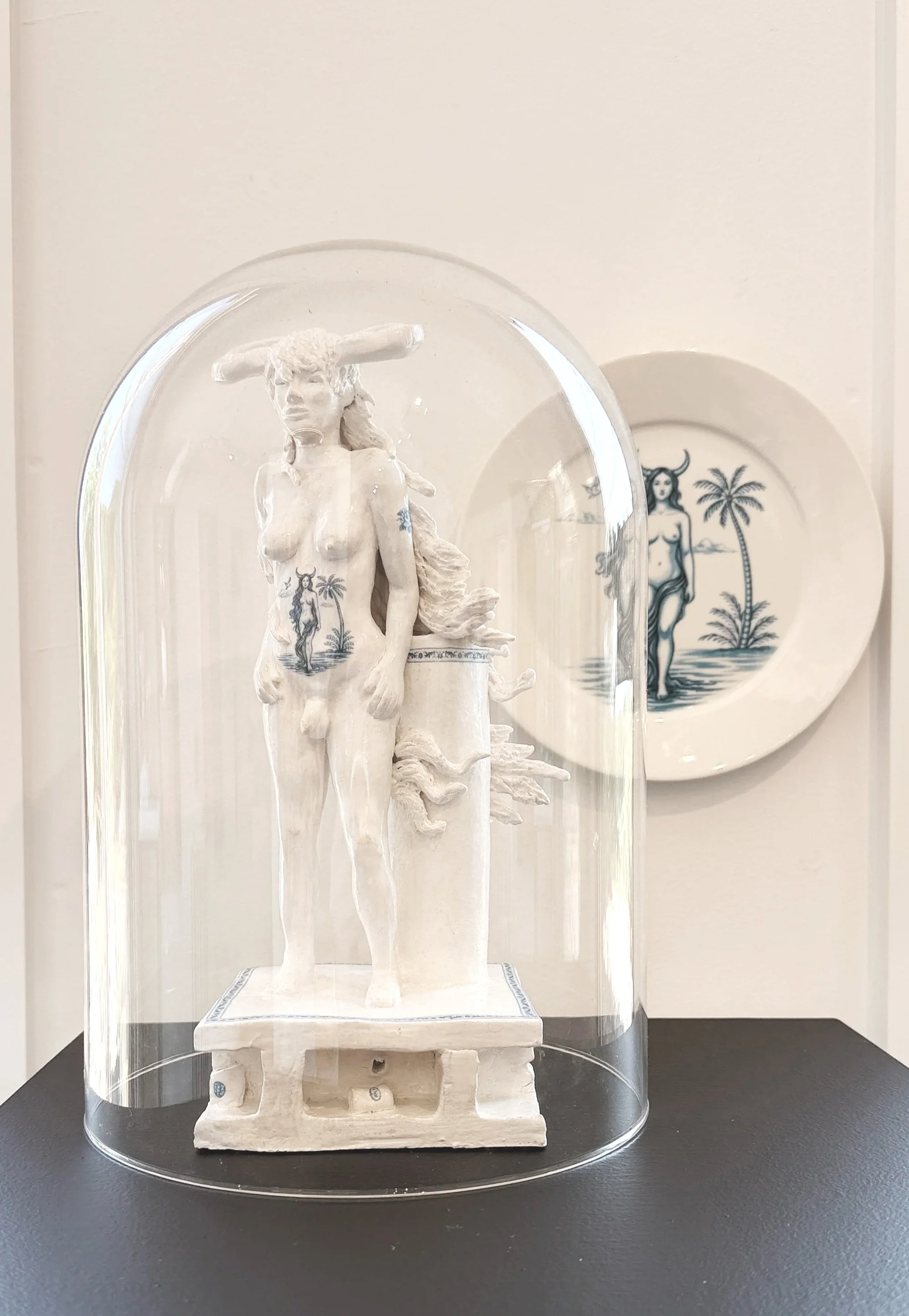
Transgender is part of Invaluable, an ongoing series celebrating bodies that exist beyond conventional standards of beauty and reminding us that every body deserves dignity, visibility, and love.
Inspired by a close Filipina transgender friend and by Botticelli's The Birth of Venus, the sculpture reimagines the goddess of love not as a mythological figure, but as a proud transgender Filipina woman. Her long hair becomes a symbol of femininity, identity, and self-determination. Unlike Botticelli's Venus, she does not conceal herself. She stands openly and unapologetically, inviting us to reflect on why some bodies are celebrated while others are questioned.
The figure rises from a pedestal inspired by the architecture of Manila, a city where beauty and struggle coexist. Embedded within its surface are fragments of urban life: plastic, waste, and traces of infrastructure that speak to environmental and social neglect. Yet from this landscape she emerges radiant and dignified, crowned with the horns of the carabao, the national animal of the Philippines and a symbol of resilience, strength, and endurance.
Like the other works in this series, the sculpture is conceived as a contemporary reinterpretation of Chinese porcelain, one of the most treasured and admired artistic traditions in history. For centuries, porcelain has been preserved, displayed, and celebrated for its beauty, rarity, and perceived value. Here, the human body takes its place. Self-designed blue motifs, inspired by traditional porcelain decoration and Filipino culture, become tattoos across the figure's skin, transforming ornament into identity and presenting the body itself as something precious, unique, and worthy of admiration.
Her nudity is intentional, not vulnerability, but presence. A declaration of self-worth in a world that too often asks certain people to hide. By standing openly, the figure also challenges the misconception that transgender women must alter their bodies in order to be recognized as women. The work affirms that womanhood is not determined by anatomy, genitalia, or medical procedures, and that a person's identity does not begin or end in surgery.
Transgender is an ode to visibility, resilience, and belonging. It celebrates transgender womanhood, honors the strength of the Filipino people, and affirms a simple truth: every person deserves to be seen, respected, and loved.