
The Year of the Horse: A Timeless Muse in Art From Ancient Symbol to Contemporary Inspiration
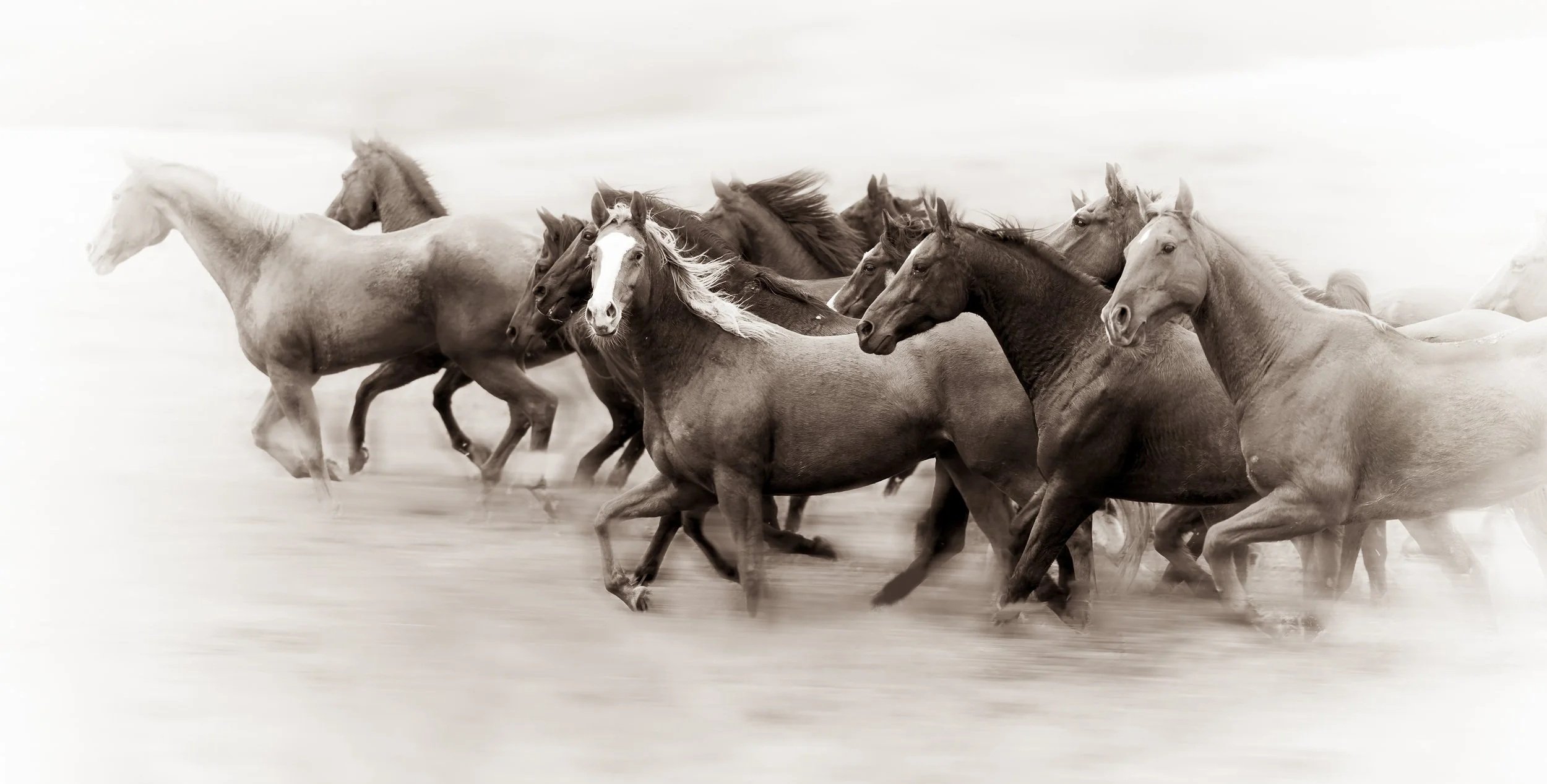
Photograph by Debbie Rubin
Few images in art are as instantly recognizable—or as endlessly reinterpretable—as the horse. Across centuries, cultures, and artistic movements, horses have carried meaning as much as they’ve carried people: power, freedom, work, prestige, mythology, motion, and spirit. In the Chinese zodiac, the Horse is also an archetype associated with vitality, independence, charisma, and forward momentum—an energy that lends itself naturally to the creative imagination.
Now that we have arrived at the “Year of the Horse,” it’s the perfect moment to explore how the horse has influenced artwork through the decades—and why this subject continues to inspire artists today.
What “The Year of the Horse” Means
The Chinese zodiac follows a repeating 12-year cycle, and the Horse is the seventh animal in that sequence. The cycle repeats every 12 years (for example: 2014, 2002, 1990, 1978, 1966, 1954, 1942), while the zodiac’s five-element system (Wood, Fire, Earth, Metal, Water) creates a 60-year cycle that shapes the “type” of Horse year.
Many references identify 2026 as a Year of the Fire Horse, beginning around mid-February 2026 and continuing into early 2027 (based on lunar-calendar timing, rather than January 1).
Whether you interpret the zodiac spiritually, culturally, or symbolically, the Horse carries a consistent creative charge: movement, heat, daring, individuality, and an appetite for the horizon.
Why Horses Have Always Belonged to Art
Horses are uniquely positioned in human history. They have been companions, engines of labor, tools of war, symbols of status, and icons of beauty. That’s why horse imagery is rarely “just” animal imagery—it’s often a portrait of civilization itself.
When artists depict horses, they can be depicting:
ambition and social rank
migration and travel
labor and endurance
conquest and conflict
wildness and freedom
beauty, anatomy, and motion
The horse becomes a mirror—reflecting whatever era and culture asks it to carry.
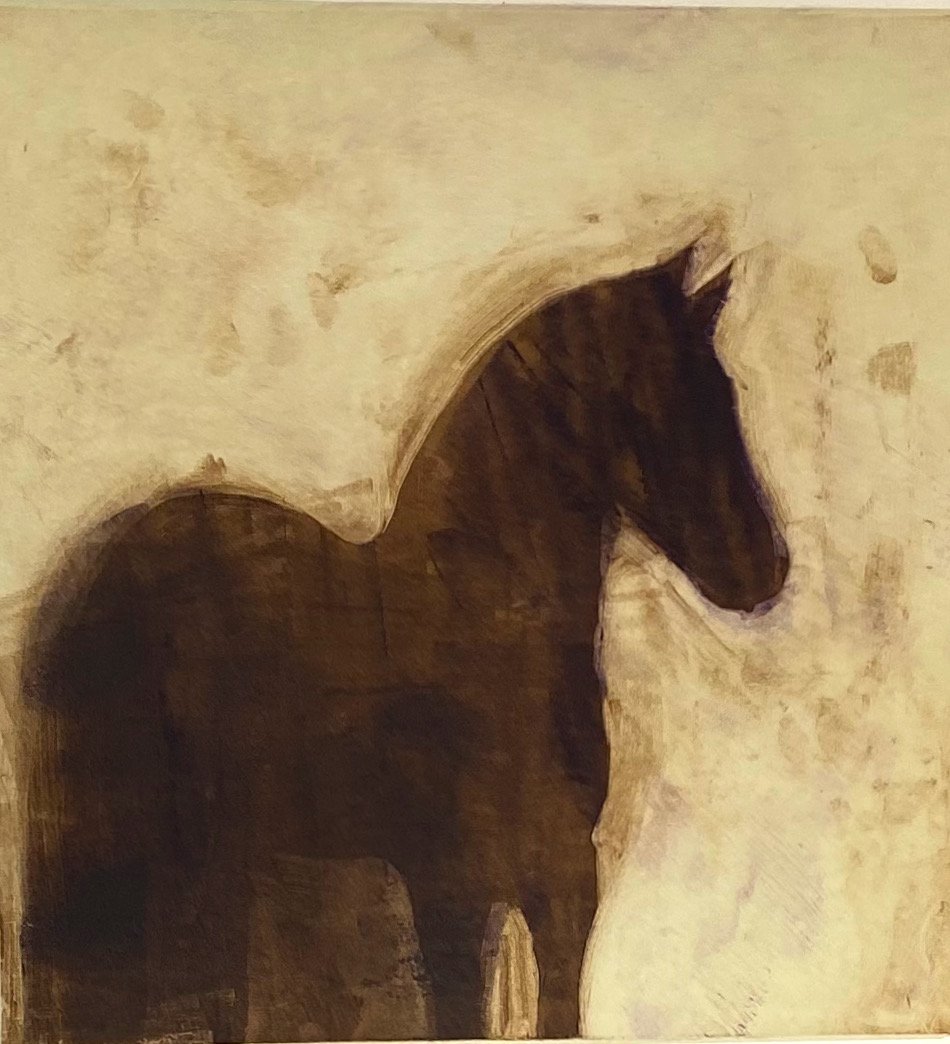
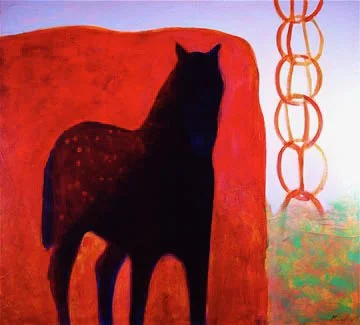
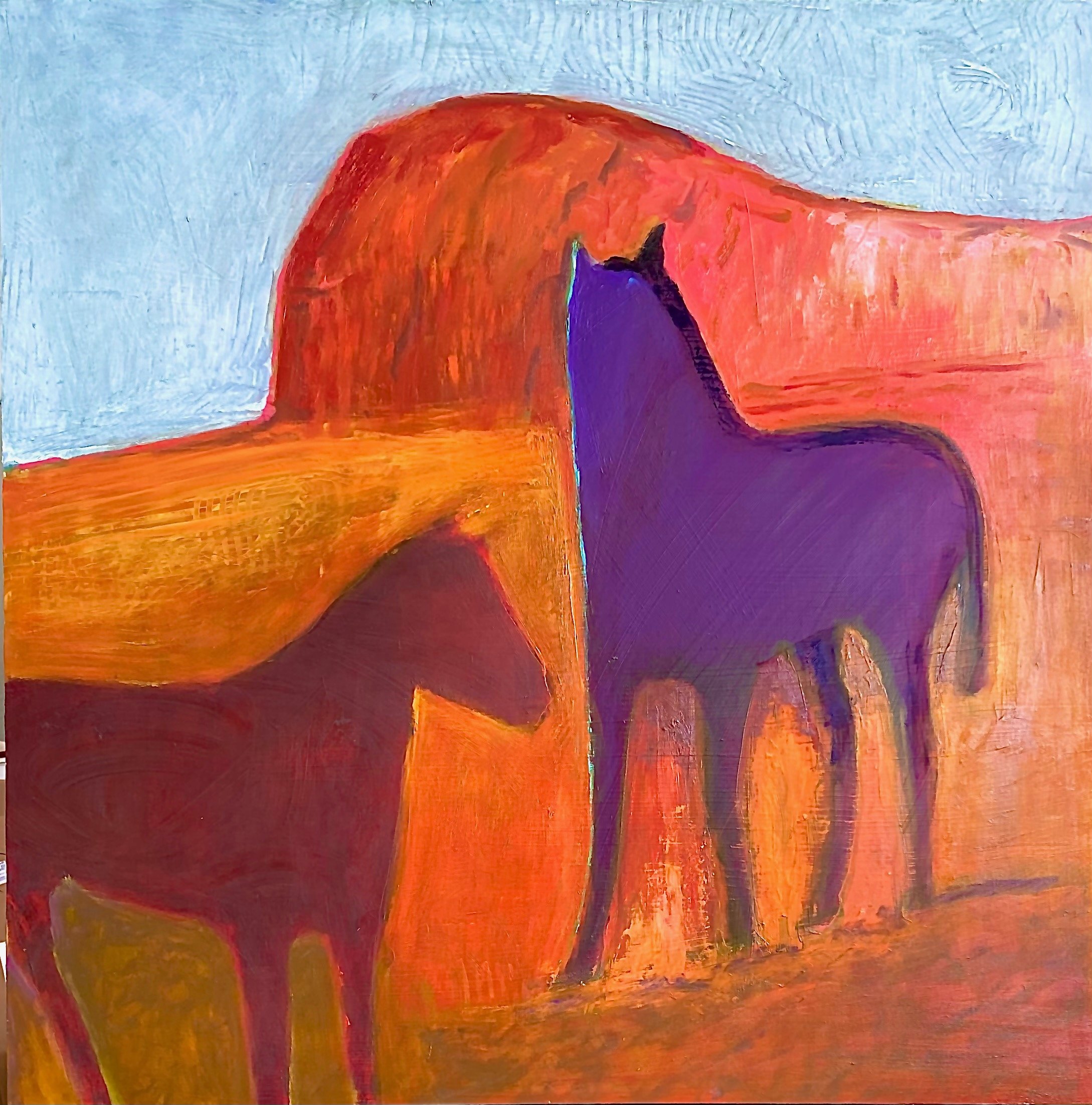
Work by Phil Garrett
A Brief Art History of the Horse
1) Prehistoric beginnings: Horses on cave walls
Among the earliest celebrated images of horses are those found in Paleolithic cave art. At Lascaux (c. 16,000–14,000 BCE), horses appear with a striking sense of line, proportion, and life—proof that the horse captured attention from the very beginning of human image-making.
2) Ancient worlds: Prestige, ceremony, and the afterlife
As civilizations developed, horses became closely linked to empire, trade, and elite identity. In Tang-dynasty China, sancai-glazed ceramic horses were created as tomb figures—objects meant to accompany the deceased and symbolize wealth, culture, and status.
3) Renaissance through 18th century: Anatomy, elegance, and the equine portrait
In Europe, the Renaissance era intensified the study of anatomy and proportion, and horses became major subjects for drawing and observation. Leonardo da Vinci’s horse studies show the depth of attention artists gave to structure, musculature, and movement.
By the 18th century, horses weren’t merely supporting characters in heroic scenes—they became worthy of portraiture in their own right. George Stubbs’s Whistlejacket (c. 1762) is one of the most famous examples: a monumental, dignified portrait that treats the horse as the primary subject, full of presence and personality.
4) The 19th century: Speed, modernity, and motion studies
Modernity brought new questions: what does speed look like, really? Eadweard Muybridge’s photographic sequence The Horse in Motion (1878) broke movement into frames and changed the way artists—and the world—understood motion. The horse became central to the story of visual innovation, helping set the stage for film and modern photography.
5) Modern & contemporary art: Symbol, psyche, and reinvention
In the 20th century and beyond, artists increasingly used horses to convey emotion, symbolism, and psychological narrative. Rather than depicting a horse simply as it appears, artists explored what the horse represents: spiritual energy, freedom, fear, memory, identity, and myth.
Today, horses remain everywhere—in painting, sculpture, ceramics, photography, collage, and digital work—because the subject can hold endless meaning. Some contemporary artists return to horses for their beauty and athletic form, while others use them to explore power structures, heritage, spectacle, and the human relationship to nature.
Why the Year of the Horse Inspires Artists
Even for those who aren’t zodiac followers, zodiac years function as cultural prompts—an invitation to interpret a shared symbol in personal ways. The Year of the Horse is especially compelling because its themes are naturally visual and emotionally legible:
Momentum: the urge to move, change, build, chase
Freedom: wildness, independence, open landscapes
Vitality: charisma, energy, heat, courage
Individuality: self-direction, personal style, fearless decisions
Artists respond to these themes with everything from literal equine portraits to abstracted forms that embody motion, tension, and spirit.
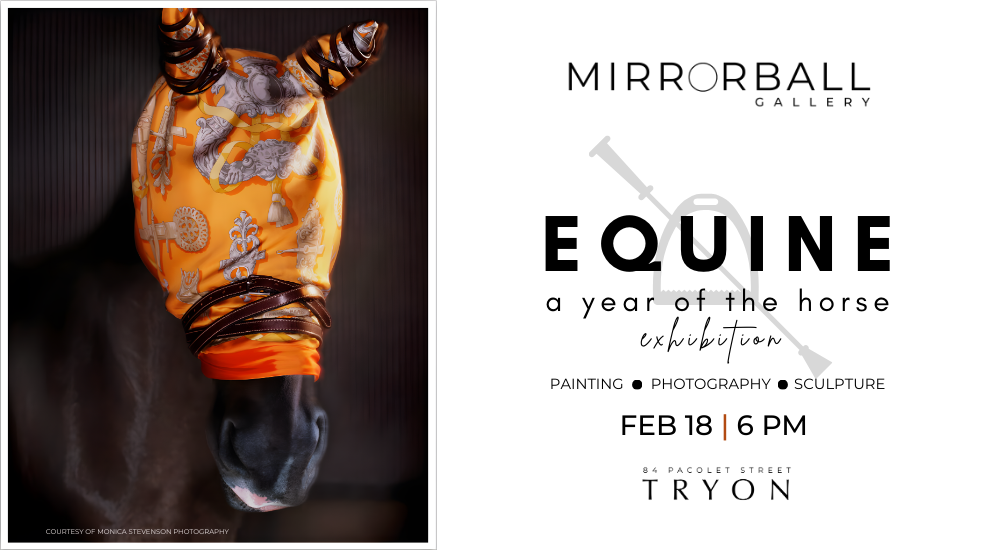
Mirrorball Gallery: Year of the Horse Exhibition — February 2026
To celebrate this moment, Mirrorball Gallery is proud to present a special exhibition and opening event:
“Year of the Horse” Exhibition Opening Featuring Chef Sharone’s Chinese Delights
Wednesday, February 18, 2026 | 6:00–10:00 PM
Mirrorball Gallery | 84 Pacolet Street, Tryon, NC
This opening invites guests into an immersive evening where visual art and culinary experience meet—an energetic celebration of the Horse as symbol, muse, and cultural force.
How to experience the show
When you visit, consider viewing the work through a “Horse lens”:
Is the horse literal—or implied through gesture, shape, and movement?
Does the work feel like speed, stillness, tension, or release?
Where do you see freedom: in the composition, color, negative space, or material?
What is the horse carrying in this piece—power, memory, myth, or transformation?
The most compelling horse-inspired works don’t simply depict an animal. They capture a force.
A Symbol That Never Stands Still
The horse has endured through every shift in art history because it can hold contradictions: elegance and power, loyalty and wildness, labor and luxury, myth and reality. Each decade reimagines it, each culture reshapes it, and each artist finds something new to say through its form.
As the Year of the Horse approaches, Mirrorball Gallery invites you to celebrate the spirit of this timeless muse—through artwork that moves, stories that resonate, and an opening night designed to feel like momentum itself.
Join us on February 18 at Mirrorball Gallery
